I remember the silence before I remember the screaming.
It arrived in pieces. First the traffic stopped. Then the arguments outside the pharmacy. Then the familiar little noises of a city pretending it was not frightened: delivery scooters, a neighbour’s radio, somebody dragging a bin across the pavement. By dusk, even the dogs seemed to be listening.
I was in the television studio when the emergency feed froze. The screen held on a presenter from the morning shift, mouth open in the middle of a sentence. Behind him, the city map blinked red. I waited for the director to say we were going live. Instead, he asked whether anyone had a working torch.
That was the moment the studio stopped being a studio and became a room with windows.
The first rule was to stop being interesting
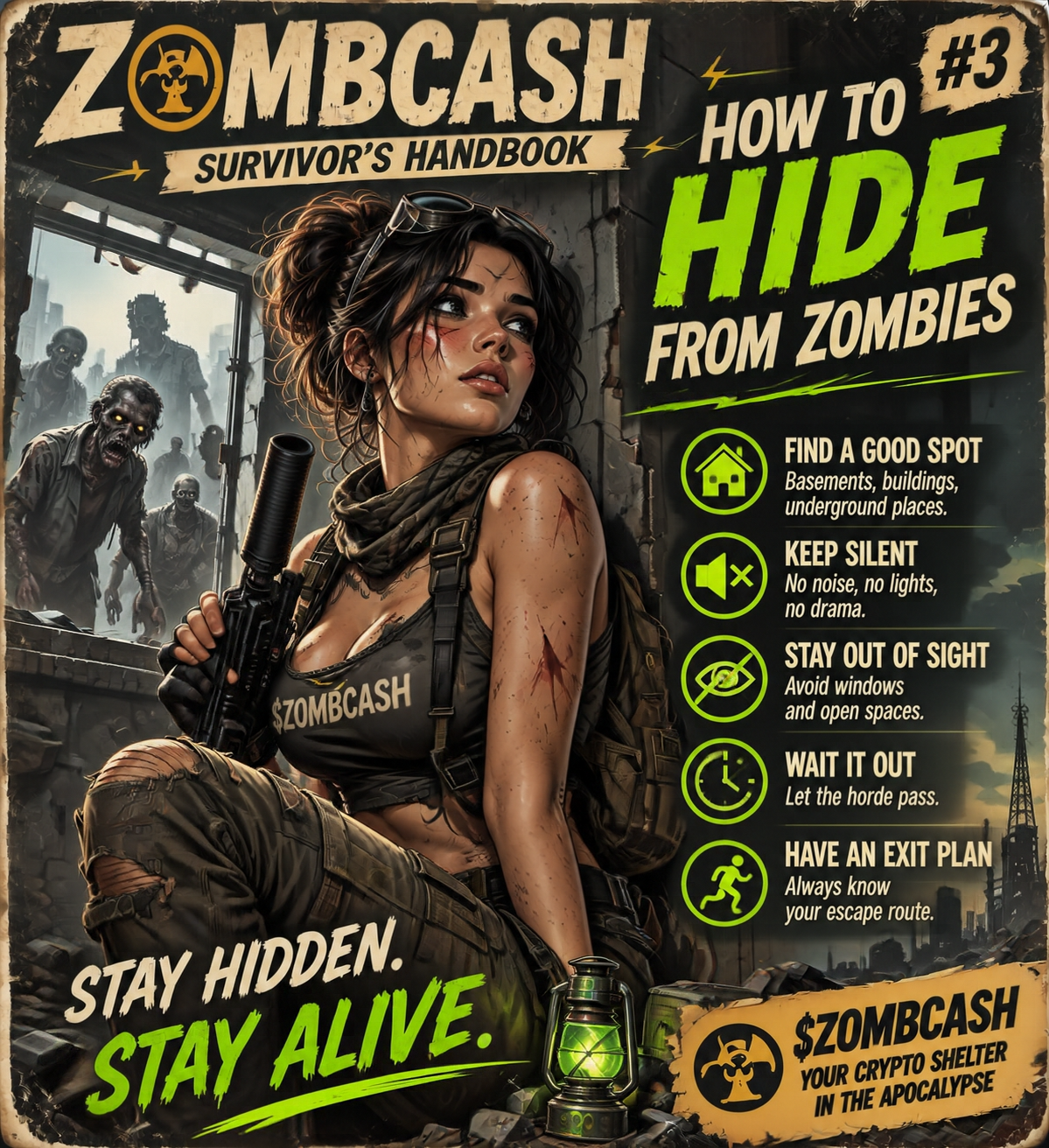
Our first shelter was not heroic. It was a basement beneath a closed print shop, smelling of wet cardboard and old coffee. There were six of us, three phones with battery, one torch, and a packet of crackers that had clearly been purchased by someone who believed in portion control more than morale.
We chose it because it had a heavy door, few windows, water pipes, and a second route through a service corridor. We did not choose it because it was comfortable. Comfort had left town with the buses.
The poster says to find a good spot, keep silent, stay out of sight, wait it out and have an exit plan. Those are not cinematic instructions. They are a reminder to reduce exposure and preserve options. A shelter is not simply a roof. It is a place where you can control access, avoid hazards, communicate quietly and leave without crossing the danger you were trying to avoid.
My colleague Tomas wanted to keep the studio lights on so rescuers could see us. I asked whether he planned to signal them with a lighthouse. He did not laugh. Fear is a poor audience; it rarely applauds the joke on time.
Silence is not the same as safety
By the second night, the basement had acquired a rhythm. Someone listened at the door. Someone counted water. Someone tried to charge a phone from a power bank that had been advertised as “ultra-capacity” by a company now presumably eaten by its own marketing department.
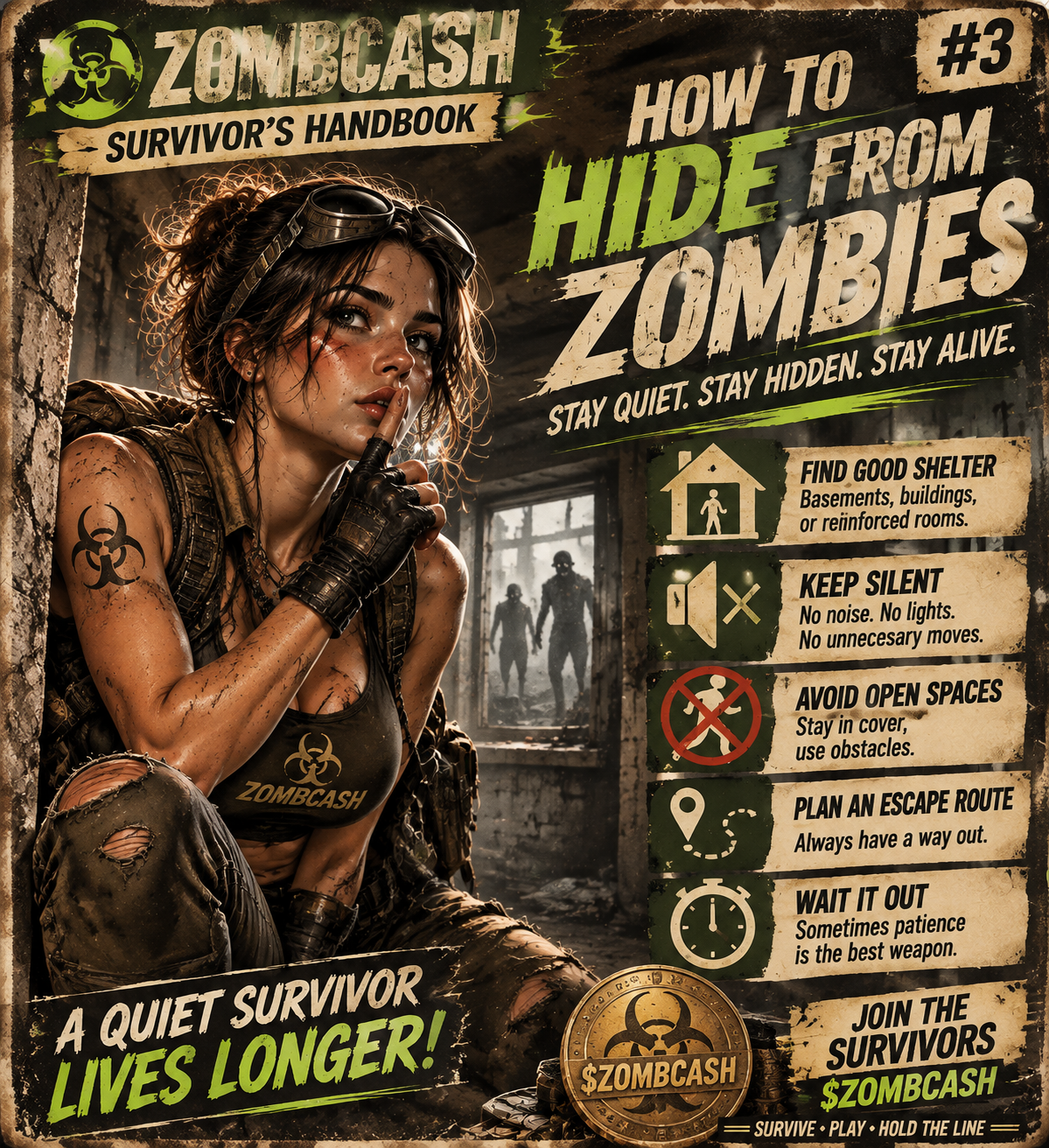
We learned not to confuse silence with doing nothing. We whispered plans. We checked the door. We marked the corridor. We agreed on a meeting point if we were separated. A quiet group with no plan is still just a group waiting to be surprised.
The two shelter posters repeat some of the same advice. That repetition is deliberate in the story: on the first day you hear a rule; on the second, you understand why you should have listened. In real life, repetition also helps under stress. People remember simple, practised routines more reliably than complicated instructions invented during a crisis.
At 03:10, something hit the metal shutter upstairs. Tomas stood up so quickly he knocked over the water bottle. We all froze. The sound came again, then a scrape, then nothing. We waited. Ten minutes later, a very ordinary cat walked past the basement window with the expression of a landlord inspecting a late rent payment.
We did not open the door to investigate. Curiosity is admirable in science. In a crisis, it should be accompanied by a risk assessment.
The machine that never slept — and the people who still had to think
On the third morning, the old network returned in fragments. A message arrived from a volunteer group two districts away. Then another. Then a map with three routes marked safe, unsafe and unknown. The labels mattered. “Unknown” was the most honest word on the screen.
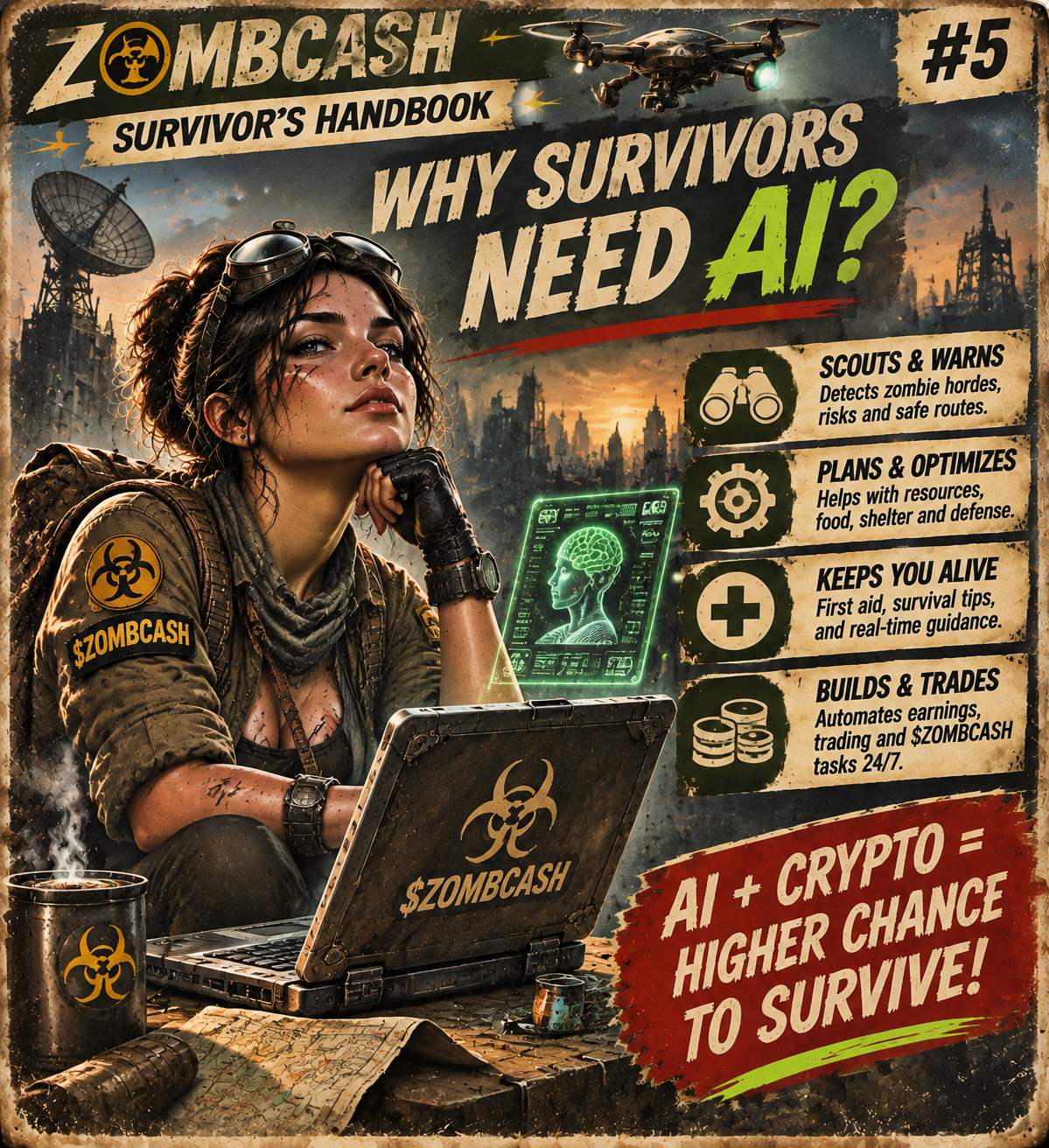
We used the assistant to collect reports, compare route updates, list supplies and draft a message for people trapped in nearby buildings. It was useful in the way a good radio operator is useful: it reduced the time between information arriving and a human being making sense of it.
But the machine did not know whether the bridge smelled of smoke. It could not tell whether a message was a prank, whether a road was blocked by an overturned bus, or whether a frightened voice had mistaken a shadow for a threat. We checked timestamps, compared independent reports and marked uncertain information as uncertain.
I gave the assistant a name: “Intern.” It accepted every task without complaint, which made it the most qualified intern in television history. It also never once made coffee.
When the old money stopped answering
The first thing the payment terminal did was blink. The second thing it did was become a very expensive paperweight.
At the corner shop, the owner had food but no way to verify card payments. The cash drawer was almost empty. People began offering batteries, bottled water, a bicycle pump, a violin with one string. The city had rediscovered barter, which is charming until you are trying to exchange half a packet of rice for antibiotics and discover that nobody has change.
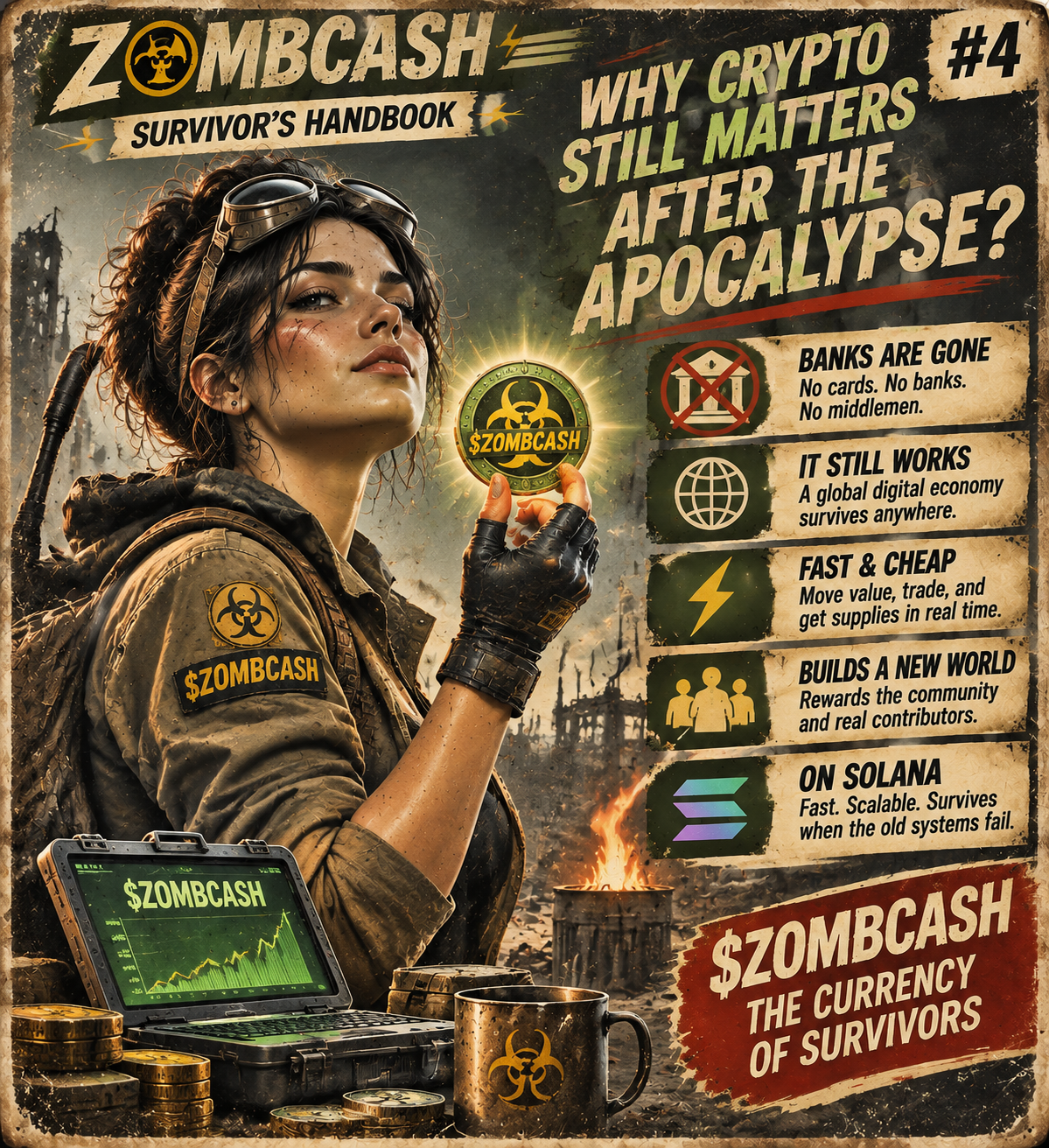
The poster makes a bold claim about a global digital economy surviving the collapse of old systems. In our fictional city, a Solana-based network becomes one possible coordination layer for people who still have connectivity. It is a story about resilience and community contribution, not a promise that a blockchain can keep the lights on.
We wrote down what we had before we tried to trade anything. Water, food, medicine, batteries, tools, transport, skills. The most valuable person in the basement was not the one with the biggest wallet. It was a nurse who knew how to clean a wound and a mechanic who could make the generator stop coughing.
Recognising danger without inventing monsters
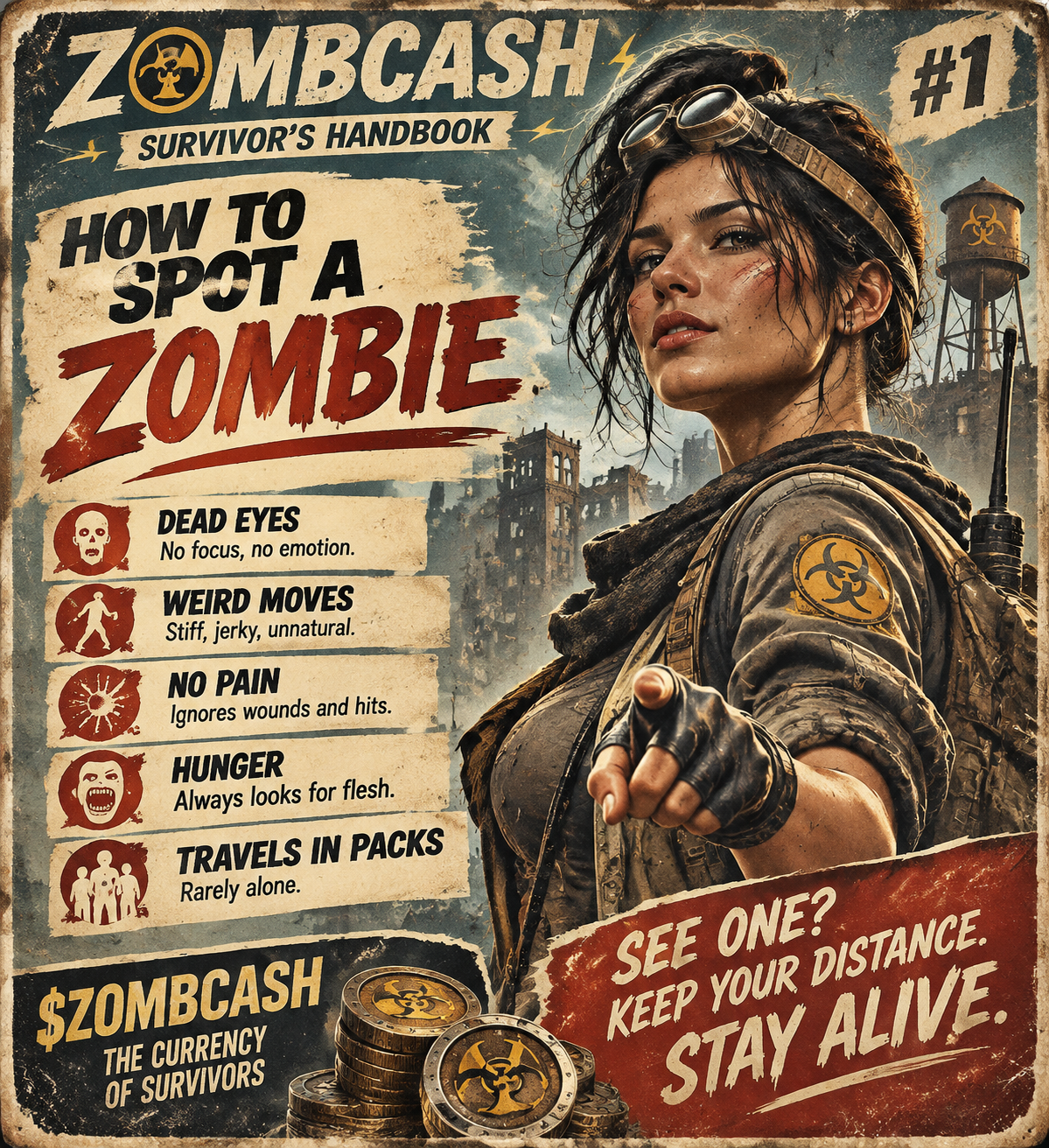
On the fourth day, I saw a man standing in the rain beside a bus shelter. His coat was torn. He did not move when a car horn sounded. His head tilted as if he were listening to a station just beyond the reach of the radio.
In the story, those details made us step back. They did not make us experts. We did not approach, provoke or try to diagnose him from a distance. We moved behind cover and reported the location.
The next poster in the series turns those uneasy impressions into a checklist of fictional warning signs: a blank stare, stiff movement, signs of injury or decay, torn clothes, little apparent response to pain, and the possibility that others may be nearby. They are visual conventions of the zombie genre, not a real medical diagnostic tool.
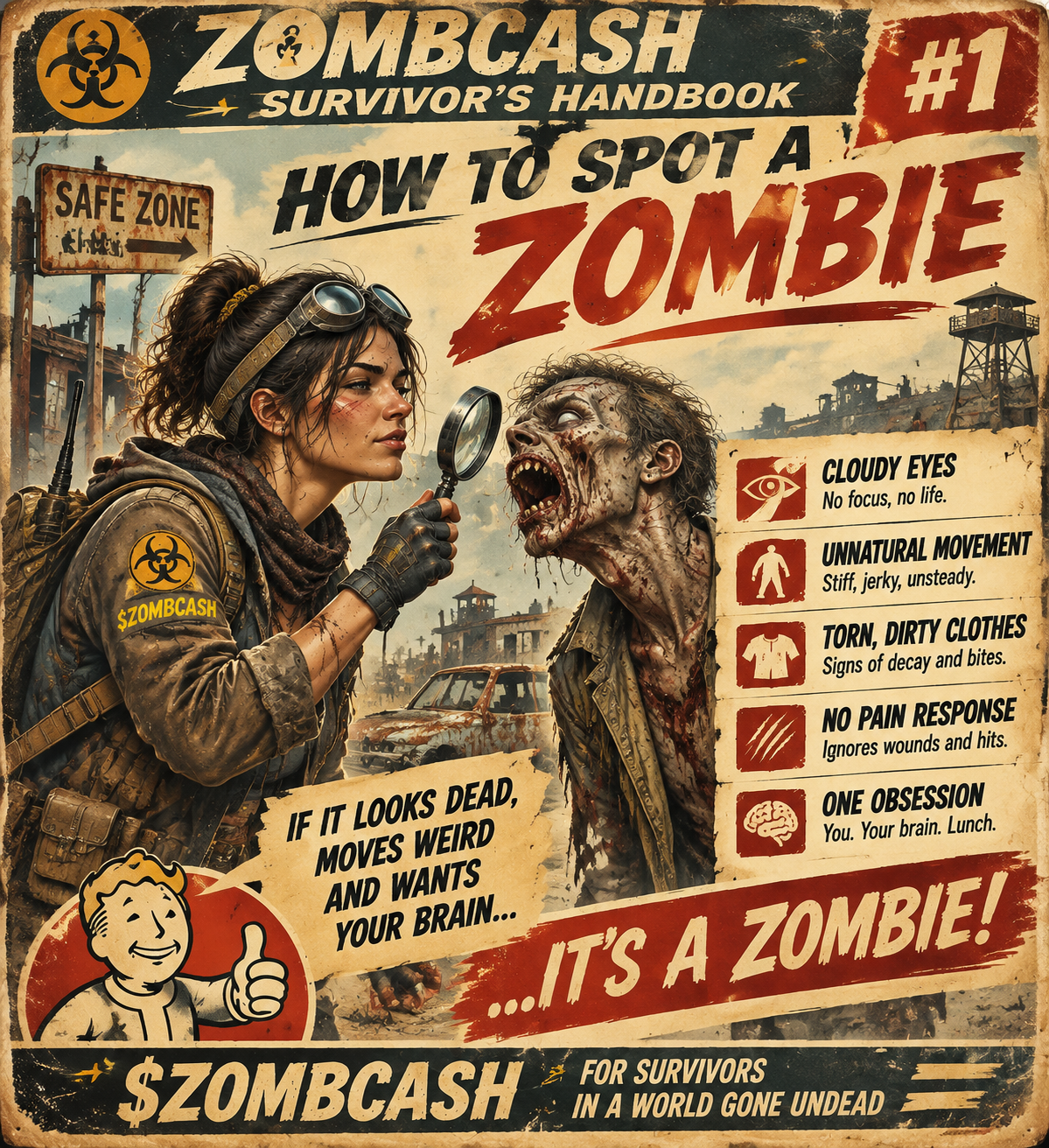
Later, we learned that the man by the bus shelter was called Elias. He had been injured in a fall, had a fever, and could barely hear the horn over the ringing in his ears. The first report described him as “one of them”. The corrected report described a human being who needed help. That correction mattered more than any map marker.
Protection is boring. That is why it works.
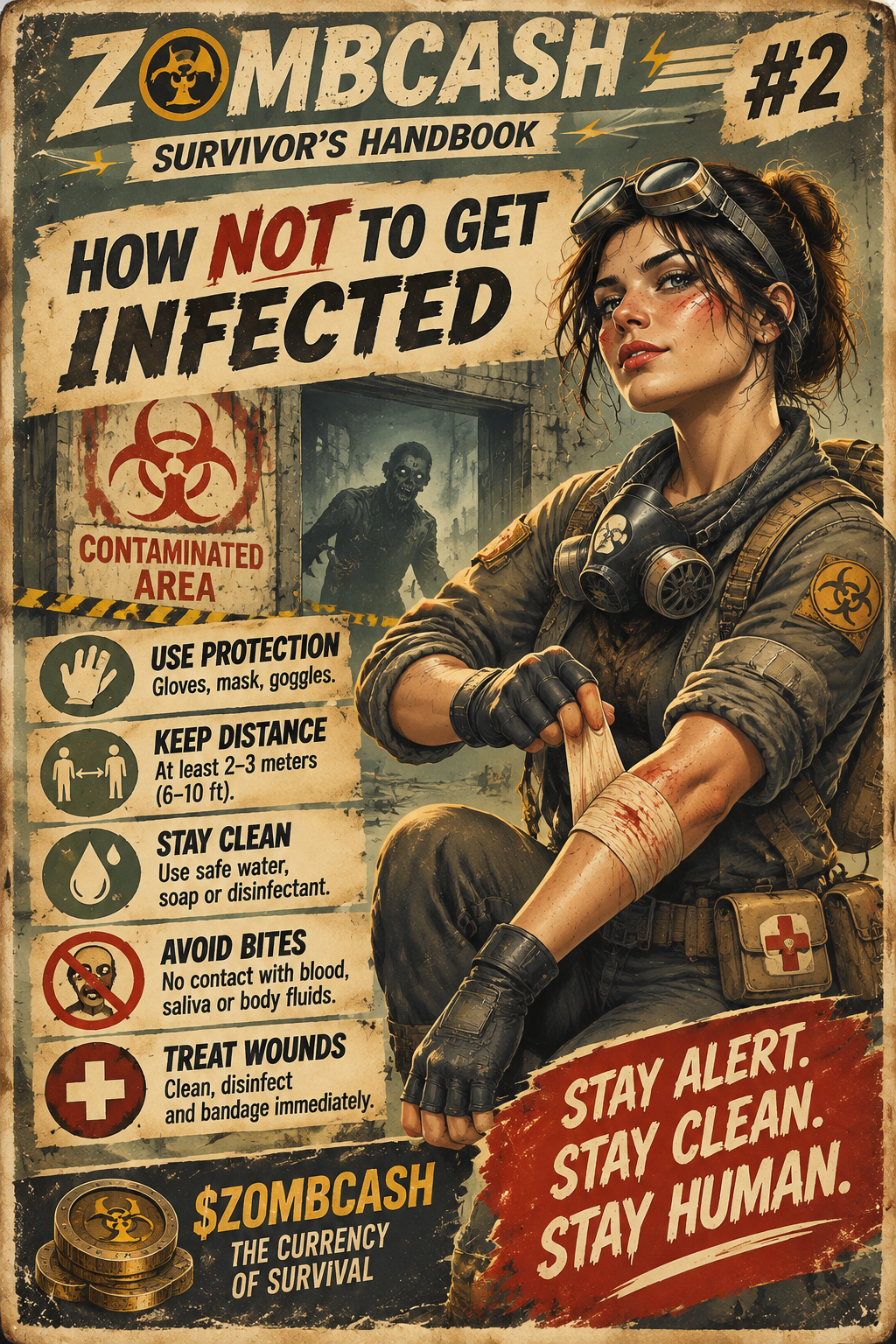
The clinic’s waiting room was full before noon. We helped carry unopened water and clean cloths to the entrance, then stayed out of the way. The poster’s advice was plain: use protection, keep distance, stay clean, avoid bites and do not touch blood or saliva unnecessarily.
Those lines are more useful when translated out of zombie language. Gloves protect hands when contact with blood or bodily fluids cannot be avoided. Eye protection can reduce splashes. Handwashing with soap and safe water is a core infection-prevention measure. A mask may be appropriate for respiratory hazards depending on the situation and official guidance. Distance reduces exposure to many infectious risks, but the correct precautions depend on how a hazard spreads.
And a bite? In our fiction, it is the nightmare. In real life, any serious bite or contaminated wound deserves prompt medical assessment. Wash the wound with soap and running water, control bleeding with clean material, cover it, and seek urgent professional care. Do not pour harsh chemicals into tissue or improvise surgery with a kitchen knife. The kitchen knife is already busy being a kitchen knife.
The last room with a light on
By the end of the week, our basement had become a small town. Someone labelled the water. Someone kept a paper list of medicines. Someone charged radios in shifts. We set quiet hours, checked on the elderly couple in the next building and agreed that nobody went out alone unless there was no alternative.
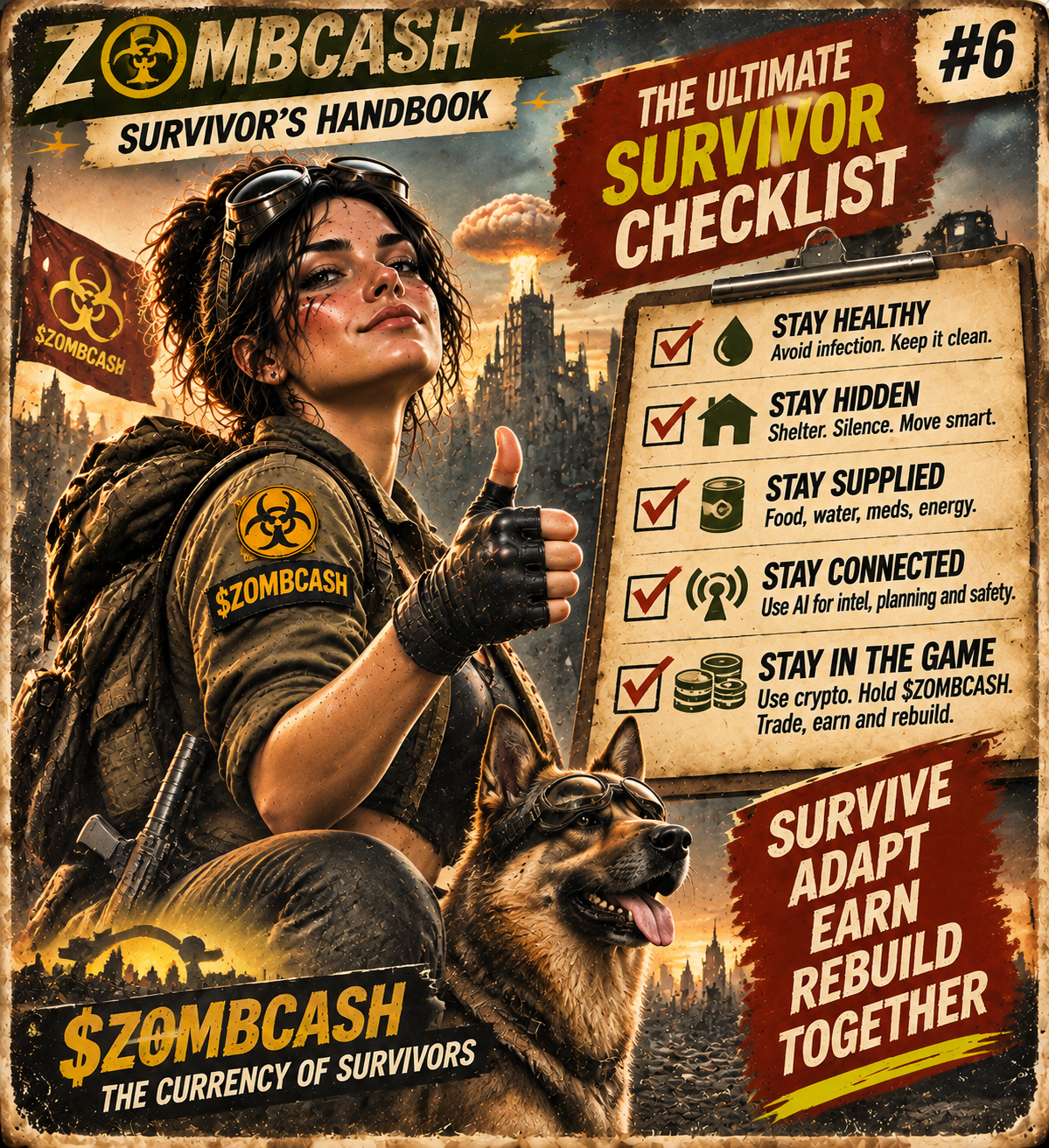
The final poster says: stay hidden, stay supplied, stay connected, stay in the game. Its last line carries the project’s own strange optimism: earn, contribute and rebuild. I would add one more instruction: stay kind, especially when kindness feels inefficient.
We used a mix of old and new tools. A paper map beside a phone. A handwritten inventory beside a shared digital ledger. A radio beside an AI summary. No single system was reliable enough to become our only system. Redundancy is not glamorous, but neither is discovering that your only flashlight has been left in the car.
When the first relief convoy finally reached our street, nobody cheered. We were too tired. The driver asked who was in charge. Six people pointed at six different people. Then the nurse took the clipboard, the mechanic opened the gate, and the rest of us got to work.
I went back to the studio three weeks later. The red map was gone. The glass wall was cracked. Somebody had left a mug on the desk with the words WORLD’S OKAYEST PRODUCER. I kept it.
People ask me what the outbreak taught me. They expect a grand answer about courage, technology or the end of the world. The truth is smaller. Find shelter that fits the danger. Keep an exit. Share verified information. Protect one another. Learn what your tools can and cannot do. And never confuse a confident voice with a reliable source — not even when that voice belongs to the person reading the news.
Especially then.
“The city did not survive because we were fearless. It survived because, eventually, we learned to be useful to one another.” — Raven